Tue 6 Jan 2026
The iPhone and the Lone Innovator Myth
Posted by andy under ManagementDuring a recent discussion on product management, one of the participants cited the iPhone as an example of visionary genius – a bold leap into the unknown, so audacious that only a true visionary like Steve Jobs could have made it, made without any research or the incremental, empirical development process I had been discussing.
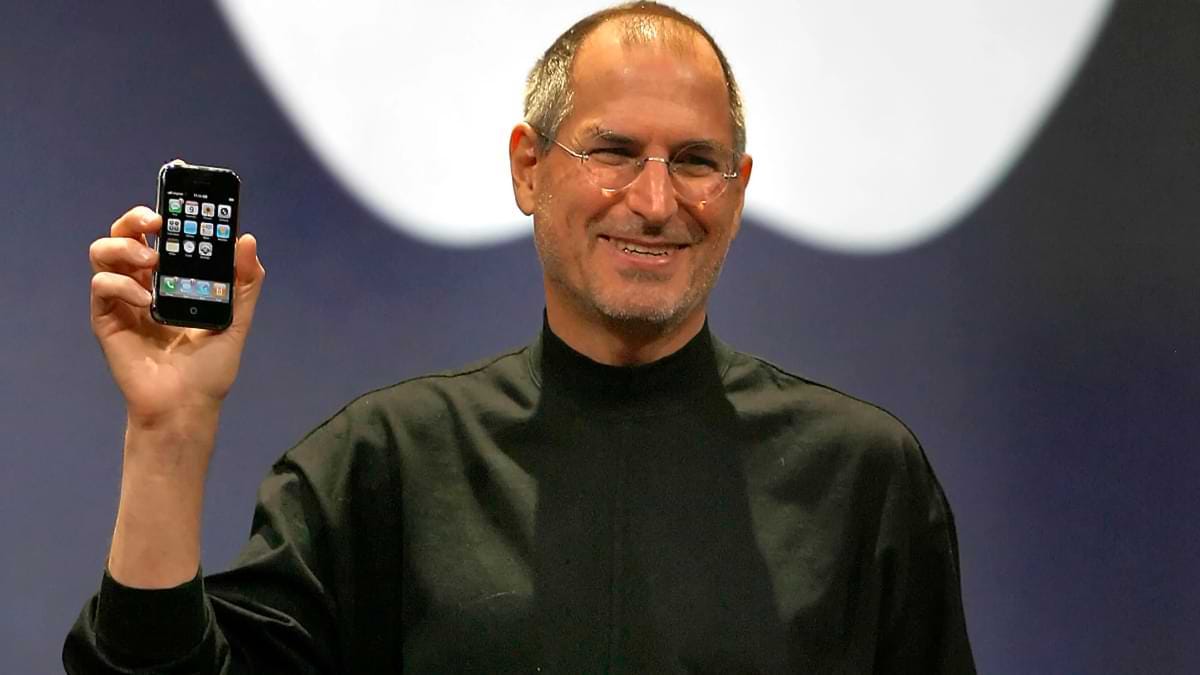
Steve Jobs presenting the iPhone (2007)
This perspective is interesting for several reasons.
First, it’s false – yet remarkably widespread.
Second, it’s false in a way that perfectly illustrates how our minds work – specifically, our tendency to create simplified narratives and attribute complex phenomena to individual “geniuses.”
Third, it’s false in a way that has practical consequences – because if we believe in lone geniuses, we lose sight of the actual mechanisms behind innovation. And that makes it impossible to apply those mechanisms.
What Actually Happened Before the iPhone
Before Jobs walked onto that stage in January 2007 and unveiled the iPhone to the world, there were already palmtops. A word almost forgotten today, yet for nearly a decade before the iPhone, people had been carrying small computers in their pockets.
The story begins in 1996 – eleven years before the iPhone’s debut – when Palm released the PalmPilot 1000 and 5000. By 1998, the Palm III had become a massive commercial success, used by geeks and busy executives alike. I have a friend who back then used his Palm for everything – from his calendar to reading e-books. Yes, Palm was also the “grandfather” of the Kindle – it just had a small, grayish LCD screen instead of e-ink.
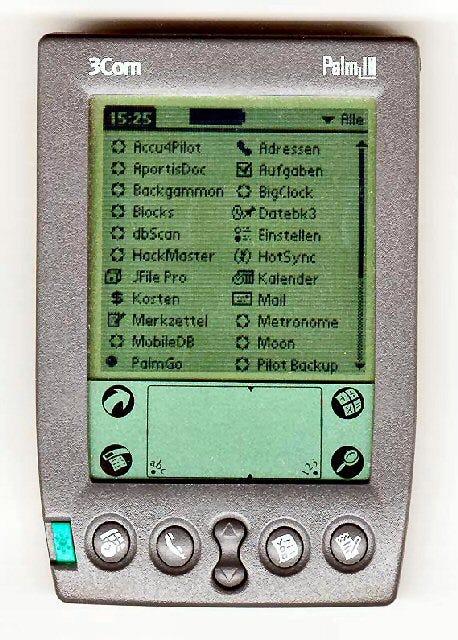
Palm and other PDAs used a stylus – a pen – to interact with the touchscreen. Jobs reportedly hated styluses (and rightly so – they’re annoying), but that doesn’t change the fact that the market for portable computing devices existed. Palm has proven that people wanted to use such devices at a scale that allowed it to become a serious company.
The Nokia 9210 Communicator, released in 2000, was one of the first true smartphones running Symbian with real applications – it demonstrated that a phone could do more than make calls or send text messages. In 2002 – five years before the iPhone – the creators of Palm released the Treo 180, a phone with PDA functionality. These two devices pointed the way forward, showing that strategically, both device categories were converging. This wasn’t Jobs’ vision – it was an obvious trend that everyone in the industry could see at the time. Conceptually, the iPhone was the same thing – just with a touch interface that didn’t require a stylus, no physical keyboard, a color screen, more memory, and so on. But it came out several years later, when advances in technology made it possible.
And what about the “revolutionary” app ecosystem? In 1999 – eight years before the iPhone – Japanese carrier NTT DoCoMo launched i-mode, the first major mobile platform with downloadable apps and content. Nokia and BlackBerry already had the ability to download software to their devices at the turn of the century. The App Store wasn’t a breakthrough conceptual innovation – it was simply a well-executed implementation of something that already existed elsewhere in fragmented, chaotic form.
At the same time, a connectivity revolution was underway. The WiFi 802.11b standard was ratified in 1999, and devices supporting it soon appeared, with prices dropping rapidly. In 2003, the first commercial 3G networks launched in Europe and Asia, offering mobile data speeds of 200-384 kbps – enough for real web browsing. By 2006, 3G was available globally, and WiFi had become nearly ubiquitous in cafes, hotels, and airports worldwide.
This was a technological convergence that made mobile web browsing technically feasible – before Apple even started thinking about a phone. And other companies were already taking advantage of it, most notably the now-forgotten BlackBerry.
Fear, Not Vision
Now for the most interesting part. What drove Apple to build the iPhone?
Not a vision of the future. Fear of losing it.
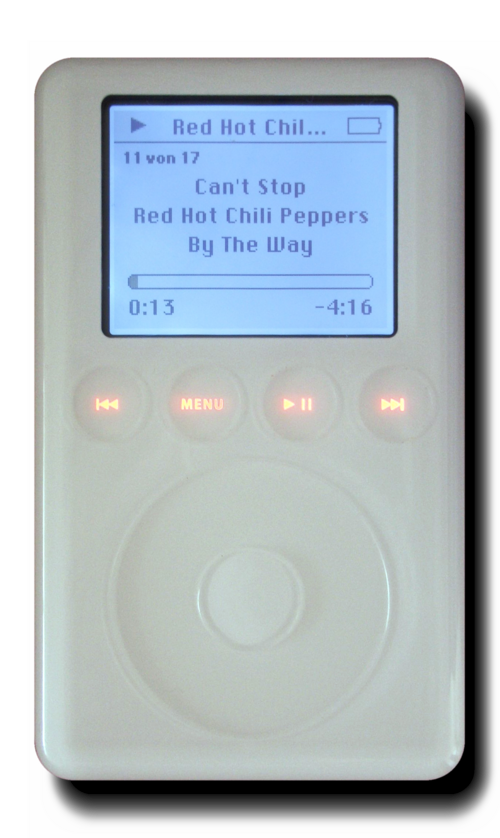
The iPod – a portable music player released in October 2001 – was Apple’s money-making machine at the time. It accounted for roughly 50% of their revenue. But the leadership team could clearly see that mobile phones were becoming increasingly capable – and that sooner or later, every phone would have a built-in music player. And nobody would want to carry two devices. Phil Schiller – one of Apple’s key executives – reportedly warned outright: “Phones are going to eat our lunch.”
So Apple had a choice: accept the gradual decline of the iPod business, or build a phone.
Then came the Motorola ROKR. In 2004, Apple partnered with Motorola to create a phone with iTunes – a collaboration they announced publicly. When Jobs saw the result, he was furious. The device was slow, ugly, simply weak – the user experience was far worse than the iPod. Despite this, the device was unveiled in September 2005 – and proved to be a commercial flop.
Tony Fadell – considered the father of the iPod – later said it plainly: the ROKR convinced Jobs that if Apple wanted music on a phone, they would have to build the phone themselves.
So decision to go ahead with the project that ultimately produced the iPhone wasn’t a leap into the unknown driven by vision. It was a reaction to a threat to the existing business, fueled further by frustration with a failed partnership.
Where Did Multi-Touch Technology Come From?
What about the revolutionary touchscreen you operate with your fingers?
Apple didn’t invent it.
FingerWorks was founded in 1998 by two researchers from the University of Delaware – Wayne Westerman and John Elias. Westerman had wrist problems (carpal tunnel syndrome) and developed multi-touch technology so he could work without pain. The company made specialized keyboards and touchpads for people with similar issues – products like the TouchStream and iGesture Pad gained enthusiastic fans among those suffering from repetitive strain injuries.
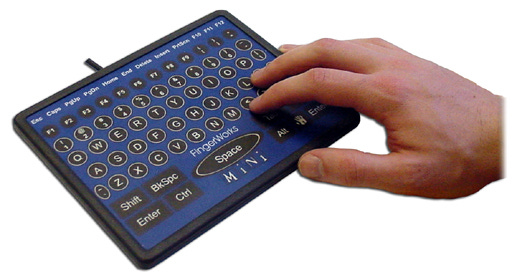
In April 2005 – two years before the iPhone – Apple quietly acquired FingerWorks. This technology – purchased, not invented – became the foundation of the iPhone’s screen. Westerman and Elias were hired as senior engineers at Apple and went on to author many of the company’s multi-touch patents over the years.
Jobs saw a demo of this technology on a large table resembling a ping-pong table, projecting a Mac interface. He reportedly said: “This is really cool. We should put this in a phone.”
Good eye? Yes. Decisiveness? Yes. Vision of something from nothing? No.
Two Competing Teams
When Apple began work on the phone in 2004 (codenamed “Project Purple”), Jobs had two teams compete against each other. One team – led by Tony Fadell, creator of the iPod – tried to build a phone based on the iPod’s click wheel interface (prototype designated P1). The other – led by Scott Forstall – worked on a device using multi-touch (prototype P2).
For many months, two parallel prototypes existed. Fadell’s team tried dozens of ways to make the click wheel work as a phone interface – without success. As Fadell later recalled: “We tried 30 or 40 ways of making the wheel not become an old rotary phone dial, and nothing seemed logical or intuitive.”
Jobs ultimately chose Forstall’s version, but the decision came only after extensive testing and comparison. This wasn’t the brilliant vision of a lone genius – it was a systematic elimination process conducted by competing engineering teams. And there were definitely multiple iterations, meaning an empirical, cyclical product refinement process.
Jobs Was Against the App Store
Now for the icing on the cake.
The App Store – perhaps the most influential element of the iPhone ecosystem, the source of unimaginable fortunes for Apple and developers – wasn’t Jobs’ idea. In fact, Jobs was initially against it.
When Apple released the first iPhone in June 2007, the only apps were those made by Apple. Jobs wanted developers to create “web apps” – applications running in the Safari browser. At WWDC 2007, he presented this as a “revolutionary” vision. Developers were disappointed – they wanted to create real, native apps that were fast, efficient, and could leverage the hardware’s capabilities.
Art Levinson – an Apple board member – reportedly called Jobs multiple times, lobbying to allow third-party apps. Jobs resisted – partly because he worried about system security and stability, partly because his team “didn’t have the bandwidth to figure out all the complexities involved in policing third-party developers,” as Levinson put it.
Eventually, he gave in to the pressure. In October 2007 – four months after the iPhone’s launch – Jobs announced that Apple would release an SDK for developers. The SDK came out in March 2008.
The App Store launched on July 10, 2008 – more than a year after the iPhone’s debut – with 500 apps at launch. In the first weekend alone, there were 10 million downloads. Today, the App Store generates tens of billions of dollars in annual revenue and forms the backbone of the entire iOS ecosystem.
And Jobs was against it – but was smart enough to change his mind.
This perfectly illustrates how much we oversimplify history when we attribute everything to one person’s “genius.”
How Innovation Actually Happens
So, to recap: the iPhone emerged from a convergence of multiple factors spanning a decade:
- 1996-2002: PDAs (Palm, Windows CE) proved that people want portable computers
- 1999: NTT DoCoMo’s i-mode demonstrated the mobile app distribution model
- 1999-2003: WiFi and 3G networks made mobile internet technically feasible
- 2000-2002: Nokia and BlackBerry smartphones with apps pointed the direction
- 2002: Palm Treo showed the convergence of phone and PDA
- 2001-2005: iPod’s success created a foundation – but also a threat to Apple
- 2005: The Motorola ROKR failure convinced Apple they had to build their own device
- 2005: The FingerWorks acquisition delivered crucial multi-touch technology
- 2004-2006: Competition between two internal teams (Fadell vs. Forstall) led to the best solution
- 2007-2008: Pressure from developers and the board forced the creation of the App Store – despite Jobs’ initial opposition
Where in all of this is the “visionary genius who single-handedly invented the future”?
Nowhere. Because that’s not how innovation works.
But – and this is an important “but” – Jobs’ role was enormous. Just not in the way the myth suggests.
What Jobs’ Genius Actually Was
First, Jobs created the conditions in which innovation could emerge. A culture where two teams could compete on fundamentally different approaches. An environment where people were pushed beyond what they thought possible – the famous “you have two weeks” ultimatum to the interface team, after which they worked 168 hours a week and created something that surprised even Jobs. Most organizations are incapable of creating such conditions nor attract talented people that thrive in them.
Second, Jobs had a “whole widget” philosophy – controlling hardware, software, and services together. This was radical. Nokia made hardware. Microsoft made software. Carriers controlled distribution and decided what phones could do. Jobs said: we control everything, because only then can we deliver the experience we want to deliver. That’s why he was furious about the ROKR – Motorola and the carriers destroyed the user experience.
Third, Jobs was a ruthless decision-maker who maintained focus on what mattered through his famous “saying no to a thousand things”. Killing the click wheel phone after months of work took courage. Many executives would have shipped it because “we’ve already invested so much”. Jobs killed it because it wasn’t good enough – and we know there were many more such projects at Apple.
Fourth – and this is often overlooked – Jobs was a brilliant and tough business negotiator who protected the product vision. The deal with AT&T/Cingular was unprecedented. Carriers had always controlled everything – what features a phone could have, what software ran on it, even what the interface looked like. Jobs broke that model. He secured a level of control for Apple that no manufacturer had ever achieved before. Without that, the iPhone would have been crippled like the ROKR E1.
Fifth, Jobs attracted and retained talent while maintaining creative tension between them. He brought key people from NeXT. He hired and empowered people like Fadell and Ive. He created an environment where the best wanted to work – and compete with each other.
What We Lost When Jobs Died
There’s something that shows Jobs’ contribution – though different from the myth – was real and significant.
Apple under Tim Cook is more financially successful than ever. Revenue keeps growing. Margins are excellent. The supply chain runs like a Swiss watch.
But where are the new product categories? Where are the stunning innovations? Where is “one more thing”?
The company now iterates brilliantly on existing products but doesn’t revolutionize. We have the iPhone 16, which is a better iPhone 15, which was a better iPhone 14. MacBooks are faster. iPads are thinner. But where is the next iPhone – a product that creates an entirely new category?
Tim Cook is operationally brilliant – he’s the reason Apple has the supply chain it has and the margins it has. But Cook optimizes rather than revolutionizes. The “magic” – that sense that Apple might do something completely unexpected and amazing – seems to be fading.
This suggests that Jobs brought something real and difficult to replace. But it wasn’t “visionary genius inventing products from nothing.” It was something else: creative leadership that pushed toward exceptionalism. A willingness to take risks on new categories. Taste that could distinguish “good enough” from “insanely great.” The ability to maintain creative tension without destroying the company. And ruthlessness in business negotiations that protected the company’s ability to execute on its product vision – and be profitable.
Jobs wasn’t an inventor who dreamed up products. He was a catalyst, editor, arbiter of taste, negotiator, and culture-builder – who enabled teams of talented people to do exceptional work, and then protected their ability to deliver it to users without compromise.
Why This Matters
The myth of the lone genius-inventor is harmful – but not because leadership doesn’t matter. It does, enormously. Jobs proved that.
The problem with the myth is that it points to the wrong thing. It suggests that innovation is a moment of enlightenment in one person’s head. That all you need is “vision” and the rest will somehow fall into place. That the genius invents the product, and then others merely execute.
Reality is different. Innovation is a process. It’s creating conditions where talented people can experiment, compete, make mistakes, and correct them. It’s ruthlessly cutting what doesn’t work – even if “we’ve already invested so much.” It’s negotiating with business partners for terms that protect product integrity. It’s attracting talent and maintaining productive tension between them.
Jobs was brilliant at all of this. But his genius lay in conducting the orchestra he built, not in playing a solo.
For those of us who want to create innovative products and organizations, there’s a practical lesson here. Don’t look for a “visionary” who will invent the future. Build teams capable of systematic exploration. Create a culture that tolerates experiments but doesn’t tolerate mediocrity. Learn to say “no” – even to things you’ve already invested in. Negotiate business terms that protect your ability to deliver an excellent product.
And remember that history is rarely as simple as we tell it. The iPhone didn’t spring from Jobs’ head like Athena from the head of Zeus. It grew from a decade of technological evolution, from the work of many teams, from failures and successes, from acquisitions and negotiations. And Jobs – yes, he was a genius – but a different kind of genius than the myth suggests. A genius who knew how to create conditions where other geniuses could do their best work.
That’s harder to emulate than “have a vision.” But it’s actually possible to emulate.